
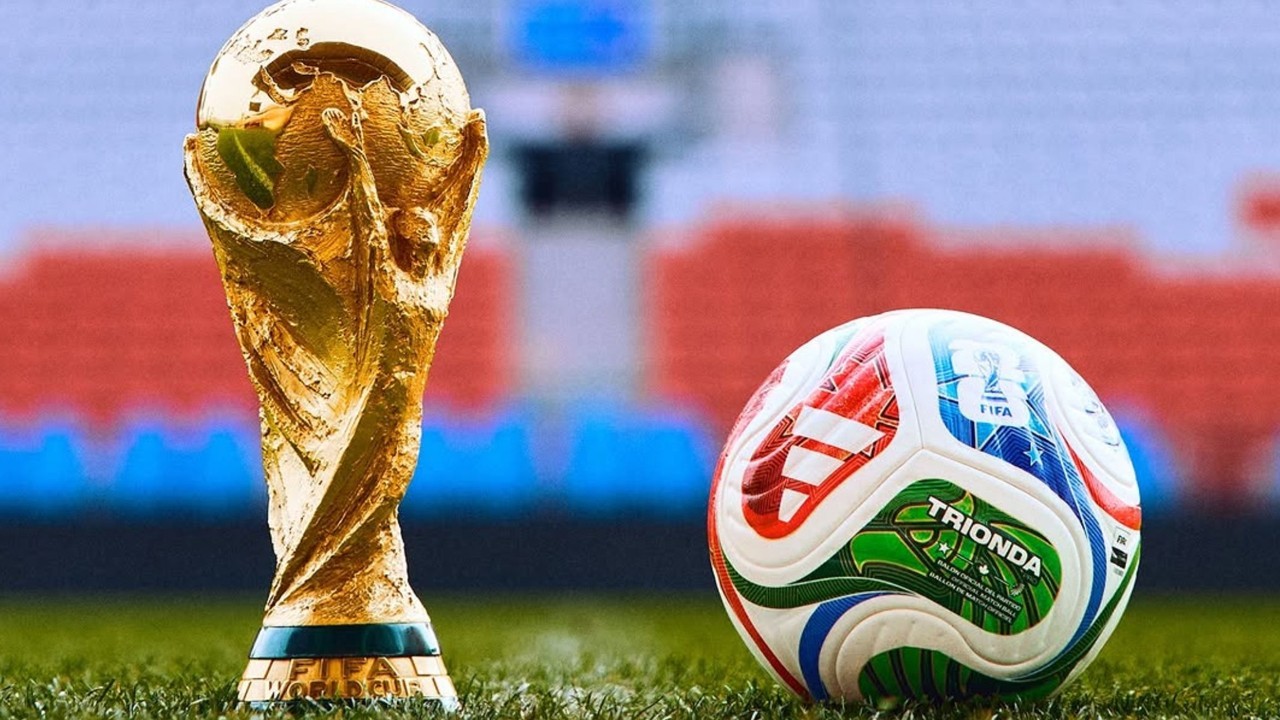
The FIFA World Cup 2026 is no longer a distant concept. With qualification campaigns nearing their conclusion and the expanded tournament fast approaching, the shape of the biggest World Cup in history is finally coming into focus.
Set to be staged across three host nations—the United States, Canada, and Mexico—the 2026 edition represents a turning point for the global game. It will be the first World Cup to feature 48 teams, the first to be jointly hosted by three countries, and the longest tournament FIFA has ever organised.
With 42 of the 48 teams already qualified, storylines are emerging across every confederation. European heavyweights have secured their places, traditional South American powers are safely through, and a new wave of debutants and underdogs has ensured that the expanded format delivers on its promise of broader global representation.
From qualification and format changes to venues, weather concerns, and political questions, here is everything you need to know about the FIFA World Cup 2026.
When and Where Is the FIFA World Cup 2026?
The FIFA World Cup 2026 will be staged across the United States, Canada, and Mexico, marking the first time the tournament has been hosted by three nations simultaneously.
The tournament will begin on June 11, 2026, with the opening match taking place in Mexico City, and will conclude on July 19, 2026, when the final is played in New Jersey, United States.
At 39 days, it will be the longest World Cup in history—an inevitable result of expanding the tournament from 32 teams to 48 while maintaining rest periods and logistical balance.
For Mexico, this will be a historic moment. The country becomes the first nation to host World Cup matches at three separate tournaments, having previously staged the event in 1970 and 1986. The United States last hosted in 1994, while Canada will host World Cup matches for the first time.
Why Is the 2026 World Cup So Significant?
The 2026 World Cup marks FIFA’s most dramatic structural change in decades.
The tournament expands from 32 teams to 48, doubling in size compared with the 1994 World Cup, which was also held in the United States. FIFA’s stated aim is to make the competition more inclusive, offering greater representation to Africa, Asia, and smaller footballing nations that have historically struggled to qualify.
Critics have raised concerns about fixture congestion, competitive imbalance, and player welfare, but there is no doubt that the expanded format introduces new narratives, new markets, and unprecedented scale.
For fans, it means more matches, more nations, and more opportunities for shocks.
What Will the Format Be for the FIFA World Cup 2026?
The 2026 World Cup will feature 12 groups of four teams, replacing the eight groups used in recent tournaments.
Each team will play three group matches. The top two teams from each group, along with the eight best third-placed teams, will advance to the knockout phase.
That leads to a round of 32, an additional knockout stage compared with previous editions, followed by the familiar progression through the round of 16, quarterfinals, semifinals, and final.
In total, the tournament will consist of 104 matches, up from 64 in the 32-team era.
FIFA believes the four-team group structure strikes a balance between competitive integrity and tournament length, avoiding the pitfalls of three-team groups while preserving meaningful group-stage drama.
When Will We Know All the Qualified Teams?
Although most confederations will conclude their qualification campaigns well before the end of 2025, the final line-up for the FIFA World Cup 2026 will not be confirmed until March 31, 2026.
That date marks the conclusion of FIFA’s intercontinental playoff tournament, which will determine the final two qualifiers.
European qualification will also extend into March 2026, as UEFA’s playoff system decides the final four European entrants.
What Are the FIFA Intercontinental Playoffs?
The intercontinental playoffs offer a final pathway to the World Cup for teams that narrowly miss automatic qualification.
Six teams—one from each confederation that has not already qualified—will contest two remaining World Cup places at a playoff tournament in Mexico in March 2026.
Two seeded teams, Iraq and the Democratic Republic of the Congo (DRC), receive byes to the playoff finals. The remaining four teams compete in semifinals:
- New Caledonia vs Jamaica
- Bolivia vs Suriname
The winners advance to face the seeded teams in two finals, with the winners securing World Cup qualification.
When and Where Is the World Cup 2026 Draw?
The World Cup 2026 draw will take place on December 5, 2025, even though the final list of qualified teams will not yet be complete.
The draw will be held at the Kennedy Center in Washington, DC, in the United States.
US President Donald Trump confirmed the venue while speaking at the White House, alongside Vice President JD Vance and FIFA President Gianni Infantino. Trump indicated he may personally oversee the draw, underlining the political and cultural significance the US administration attaches to hosting the tournament.
Teams still involved in playoffs will be placed into provisional slots, a familiar practice from previous World Cups.
Can the US Government Move World Cup Games?
Trump has repeatedly suggested that he reserves the right to move matches away from US host cities he considers unsafe.
Speaking in September, he stated that ensuring safety would be a priority and specifically referenced concerns about cities such as Seattle and San Francisco, describing their leadership in highly political terms.
While FIFA retains formal authority over match scheduling, the comments have sparked debate about political influence over the tournament and the balance of power between host governments and football’s governing body.
How Are Matches Split Between the Host Nations?
The United States will host the majority of matches, staging games in 11 host cities:
- Atlanta
- Boston
- Dallas
- Houston
- Kansas City
- Los Angeles
- Miami
- New Jersey/New York (joint host region)
- Philadelphia
- Seattle
- San Francisco Bay Area
Canada will host 13 matches, split between Toronto and Vancouver.
Mexico will also host 13 matches, played in Mexico City, Guadalajara, and Monterrey.
Where Will the FIFA World Cup 2026 Final Be Played?
The final will be staged at MetLife Stadium in New Jersey, one of the largest and most modern stadiums in North America.
The venue, home to the NFL’s New York Giants and New York Jets, previously hosted the Copa América Centenario final in 2016 and is expected to serve as the centerpiece of the tournament.
Who Are the Defending World Cup Champions?
Argentina enter the 2026 World Cup as defending champions, having won a dramatic final against France at Qatar 2022.
That match, widely regarded as one of the greatest World Cup finals ever played, ended 3–3 after extra time, with Argentina winning 4–2 on penalties. Lionel Messi lifted the trophy in what many consider the defining moment of his career.
Will Weather Be a Factor at the 2026 World Cup?
Weather is expected to play a significant role.
During the 2025 FIFA Club World Cup, also staged in the United States, extreme heat and thunderstorms caused major disruptions. FIFA has responded by selecting stadiums with climate control capabilities.
Three venues—Arlington, Atlanta, and Houston—feature retractable roofs expected to be closed during matches. Inglewood and Vancouver have fixed roofs, providing additional protection from heat and storms.
Despite these measures, scheduling and kickoff times will be closely scrutinised to protect players and fans alike.
Which Teams Have Already Qualified?
As of now, 42 teams have qualified for the FIFA World Cup 2026.
Hosts
- Canada
- Mexico
- United States
Asia (AFC)
- Australia
- Iran
- Japan
- Jordan
- Qatar
- Saudi Arabia
- South Korea
- Uzbekistan
Africa (CAF)
- Algeria
- Cape Verde
- Egypt
- Ghana
- Ivory Coast
- Morocco
- Senegal
- South Africa
- Tunisia
Europe (UEFA)
- Austria
- Belgium
- Croatia
- England
- France
- Germany
- Netherlands
- Norway
- Portugal
- Scotland
- Spain
- Switzerland
Scotland’s qualification marks their first World Cup appearance since 1998.
Oceania (OFC)
- New Zealand
Americas (CONMEBOL & CONCACAF)
- Argentina
- Brazil
- Colombia
- Ecuador
- Paraguay
- Uruguay
- Panama
- Haiti
- Curaçao
Curaçao’s qualification is historic, making them the smallest nation by population ever to qualify for a men’s World Cup.
Which Teams Can Still Qualify?
Intercontinental Playoffs
Six teams will contest two places, with Iraq and DRC seeded into finals.
UEFA Playoffs
Sixteen European teams will compete across four paths, with four places available:
Path A
- Italy vs Northern Ireland
- Wales vs Bosnia-Herzegovina
Path B
- Ukraine vs Sweden
- Poland vs Albania
Path C
- Türkiye vs Romania
- Slovakia vs Kosovo
Path D
- Denmark vs North Macedonia
- Czech Republic vs Republic of Ireland
Each path features semifinals and a final, with only the winner qualifying.
Final Thoughts
The FIFA World Cup 2026 is shaping up to be the most ambitious tournament football has ever seen.
With unprecedented scale, expanded representation, and a host region spanning an entire continent, it represents both opportunity and risk. New nations will experience the World Cup dream for the first time, while traditional powers face a longer, more complex road to glory.
As qualification concludes and the draw approaches, anticipation will only grow. One thing is certain: the road to 2026 promises drama long before the first ball is kicked in Mexico City.