
A Parent’s Guide to Titles That Are Far From Family-Friendly
Video games have become one of the most powerful shared entertainment mediums in modern households. Parents and children alike bond over Mario Kart rivalries, cooperative adventures, and the joy of discovering virtual worlds together. When chosen carefully, games can encourage creativity, problem-solving, and even emotional connection.
But not all games are designed with families in mind—and many are explicitly not.
While teenagers may already be exposed to mature themes and possess the emotional maturity to contextualize them, younger children are far more impressionable. Content doesn’t need to be “played” to have an impact; watching can be just as powerful. A child who still hides behind the couch during Disney villains probably shouldn’t be in the room while a parent navigates torture scenes, extreme violence, or sexualized content.
Despite ongoing debates, researchers have not established a direct, universal link between violent games and behavioral problems in children. Still, common sense—and decades of child psychology—suggests that graphic imagery, adult themes, and disturbing narratives are best kept far from young eyes.
Below is a curated list of video games that parents should avoid playing around children, not because they are “bad” games, but because their themes, imagery, or mechanics are fundamentally incompatible with young audiences.
South Park: The Stick of Truth – Animated, But Absolutely Not for Kids
At a glance, South Park: The Stick of Truth looks harmless. Bright colors, cartoon characters, and child protagonists might suggest something playful or innocent. That illusion shatters within minutes.
Based on the long-running Comedy Central series, the game fully embraces South Park’s trademark shock humor. Players take on the role of “the new kid,” joining the town’s children in a fantasy role-playing game that quickly spirals into absurdity and depravity.
The content includes graphic sexual references, explicit language, abortions, alien abductions involving anal probes, and satirical portrayals of Nazis. None of this is implied—it is shown, discussed, and central to the narrative.
Despite its RPG mechanics and cartoon aesthetic, The Stick of Truth is one of the clearest examples of why visuals alone cannot determine a game’s appropriateness.
Grand Theft Auto V – A Masterpiece of Excess
The Grand Theft Auto franchise has never attempted subtlety, and GTA V represents its most ambitious and unapologetic entry.
Set in the sprawling fictional city of Los Santos, the game allows players to switch between three protagonists immersed in a world of crime, drugs, sex, and violence. Missions include armed robberies, assassinations, and one particularly infamous scene involving graphic torture methods such as waterboarding and tooth extraction.
The online component expands the chaos further, allowing players to engage in criminal activities with others across the world.
While GTA V is often praised for its satire and technical achievement, it is deeply unsuitable for children—both to play and to watch. Its cynical worldview and explicit content make it a title best reserved for late-night sessions long after kids are asleep.
HuniePop – Puzzle Game by Day, Adult Content by Design
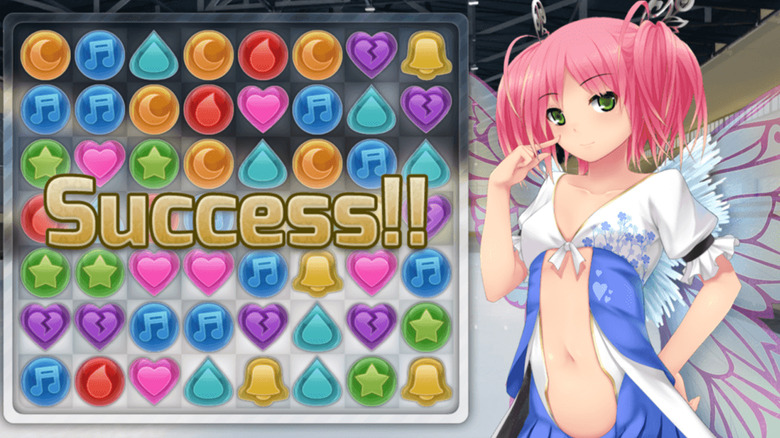
At first glance, HuniePop resembles a colorful tile-matching puzzle game reminiscent of Bejeweled. That impression lasts about five seconds.
The game combines match-three mechanics with an explicit dating simulator featuring hyper-sexualized characters. Successful puzzle matches advance romantic encounters, eventually unlocking pornographic “bedroom” scenes.
Even in its censored version, the innuendo, visuals, and progression systems are unmistakably adult. It is not a game that merely “contains” sexual content—it is built entirely around it.
Simply put, HuniePop has no place in a family setting.
Mortal Kombat – Violence Turned Into Spectacle
Mortal Kombat has been controversial since the 1990s, when its pixelated blood sparked congressional hearings and helped create the ESRB rating system.
Over time, the series didn’t retreat from its violent roots—it doubled down.
Modern entries like Mortal Kombat X and Mortal Kombat 11 feature hyper-realistic gore, slow-motion bone fractures, flayed skin, and elaborate “fatalities” that revel in graphic detail. Advances in graphics have only made the violence more visceral and disturbing.
While competitive fighting games can be thrilling, Mortal Kombat’s explicit brutality is far beyond what children should be exposed to, even passively.
Saints Row IV – Satire Without Limits
Saints Row IV is a parody of open-world action games taken to its most extreme conclusion. Players become the President of the United States, gain superpowers, and fight an alien invasion.
Along the way, the game indulges in relentless profanity, sexual humor, nudity, drug use, and absurd weapons—including an infamous alien anal probe gun.
Some countries refused to rate the game without censorship, and even toned-down versions remain wildly inappropriate for children. While its humor may amuse adults, it operates in a realm far removed from family-friendly satire.
Silent Hill: Homecoming – Psychological Horror at Its Harshest
The Silent Hill series is known for its unsettling atmosphere, and Homecoming may be one of its most disturbing entries.
The game explores themes of trauma, cult violence, sexual abuse, and graphic bodily harm. Players encounter dismembered corpses, torture imagery, and grotesque monsters designed to unsettle on a primal level.
Several countries demanded censorship or outright banned the game upon release. Even edited versions remain deeply disturbing and emotionally heavy.
This is horror meant to linger—and not something children should ever witness.
Heavy Rain – A Grim Story About Lost Children
On the surface, Heavy Rain resembles an interactive drama, relying on quick-time events and investigative puzzles rather than traditional combat.
Its story, however, is relentlessly dark.
The game follows the hunt for the Origami Killer, a serial murderer who drowns children. Themes include child abduction, abuse, grief, drug use, and sexual content. Many of the game’s endings are bleak, tragic, and emotionally exhausting.
While critically acclaimed, Heavy Rain is psychologically intense and deeply inappropriate for young viewers.
The Binding of Isaac: Rebirth – Cute, Until It Isn’t
The Binding of Isaac: Rebirth uses a charming cartoon style that can easily mislead parents.
Beneath the surface lies a disturbing narrative about child abuse, religious extremism, and trauma. Isaac is locked in a basement by his mother and forced to fight grotesque monsters using his tears as weapons.
The game’s themes become clearer over time, making it particularly unsettling once understood. While its gameplay is addictive and creative, its subject matter is far from child-friendly.
Hatred – Violence Without Context or Mercy
Few games have sparked as much controversy as Hatred. Players control a character who embarks on a mass killing spree, targeting civilians with extreme brutality.
The game offers no meaningful narrative justification or moral counterpoint. Healing is achieved by executing wounded victims, reinforcing cruelty as a core mechanic.
Even among adults, Hatred is widely considered disturbing. It is absolutely not suitable for children under any circumstances.
Loot Box–Heavy Games – Gambling Disguised as Play
Not all harmful content is graphic.
Games featuring loot boxes—randomized virtual items often purchased with real money—introduce gambling-like mechanics to young players. Titles such as FIFA, Overwatch, and Star Wars: Battlefront II have drawn international scrutiny for encouraging addictive spending behaviors.
Children lack the impulse control and financial awareness to navigate these systems responsibly. Exposure can normalize gambling mechanics and lead to real-world consequences.
Parents should approach loot box–driven games with extreme caution.
P.T. – Psychological Horror at Its Peak
Hideo Kojima’s P.T. is often cited as one of the most terrifying interactive experiences ever created.
Set in a looping hallway filled with unsettling audio, disturbing imagery, and psychological manipulation, P.T. relies on dread rather than jump scares. Its themes include domestic violence, murder, and trauma.
Even adults often find it overwhelming. Children should not be anywhere near it.
Final Thoughts: Context Matters
Video games are not inherently harmful—but they are powerful. The same medium that delivers joy, creativity, and connection can also expose players to extreme themes that children are not equipped to process.
Age ratings exist for a reason. Parents don’t need to ban all mature games, but they do need to be mindful of when, where, and around whom those games are played.
Gaming is better when shared responsibly—and some experiences are simply meant for adults.