
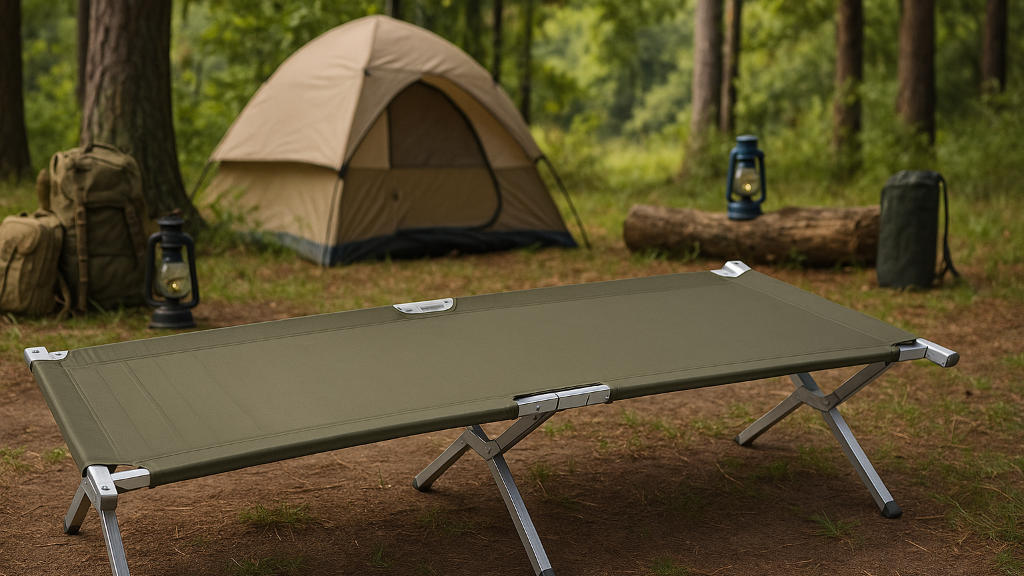
In environments where comfort is scarce, rest becomes a strategic resource. For soldiers deployed in remote terrain, emergency responders working through disasters, or campers seeking reliable shelter far from civilization, the humble army cot has long provided a dependable solution. Simple in concept yet refined through decades of military use, the army cot stands as a testament to functional design—portable, durable, and engineered to deliver rest under the most demanding conditions.
Often associated with military barracks and field hospitals, army cots have evolved far beyond their original purpose. Today, they are widely used in disaster relief shelters, outdoor recreation, temporary housing, and even home guest accommodations. Their appeal lies in a rare combination of rugged construction, efficient portability, and practical comfort.
This article explores the history, design, types, materials, and modern applications of army cots, examining why this unassuming piece of equipment continues to earn its place wherever reliability and rest matter most.
The Origins of the Army Cot
The concept of a portable military bed dates back centuries. Armies have always faced the challenge of providing rest to troops on the move, often in hostile or unpredictable environments. Early solutions included straw mats, bedrolls, and raised wooden platforms, all of which offered limited protection from cold, moisture, and insects.
The modern army cot began to take shape in the late 19th and early 20th centuries, as industrial manufacturing enabled mass production of lightweight metal frames and durable textiles. During World War I and World War II, folding steel-frame cots with canvas sleeping surfaces became standard issue in barracks, field hospitals, and temporary encampments.
These designs proved remarkably effective. They elevated soldiers off the ground, reduced exposure to dampness and pests, and could be quickly deployed or packed away. Over time, the basic structure of the army cot became a blueprint for countless civilian adaptations.
What Defines an Army Cot?
At its core, an army cot is a portable, elevated sleeping platform designed for temporary use. Unlike traditional beds, it prioritizes function over luxury, emphasizing strength, stability, and ease of transport.
Key defining characteristics include:
- A rigid frame, typically made from steel or aluminum
- A taut sleeping surface constructed from canvas or heavy-duty synthetic fabric
- A folding or collapsible design for portability
- An elevated structure that lifts the sleeper off the ground
While variations exist, genuine military-style cots are built to withstand repeated use in harsh conditions, often supporting significant weight without sagging or deformation.
Materials and Construction
Frames: Steel and Aluminum
The frame is the backbone of any army cot. Traditionally, steel has been the material of choice due to its exceptional strength and resistance to bending. Heavy-duty steel frames are common in genuine U.S. military surplus cots, capable of supporting users well over 300 pounds.
Aluminum frames, increasingly popular in modern designs, offer a lighter alternative without sacrificing durability. While aluminum cots may not feel as indestructible as their steel counterparts, they are favored for camping and travel due to their reduced weight and corrosion resistance.
Sleeping Surface: Canvas and Polyester
The sleeping surface of an army cot is typically made from tightly woven canvas or heavy-duty polyester, such as 600D Oxford fabric. These materials are chosen for their ability to remain taut under tension while resisting tearing, moisture, and abrasion.
Canvas offers a classic, authentic military feel and excellent breathability, while synthetic fabrics provide lighter weight, quicker drying times, and enhanced resistance to mold and mildew.
Elevation: A Critical Advantage
One of the most significant benefits of an army cot is its elevation. By lifting the sleeper several inches above the ground, the cot provides protection from:
- Cold ground temperatures
- Damp or muddy surfaces
- Insects and small animals
- Uneven or rocky terrain
This elevation also improves airflow around the body, reducing heat buildup and improving sleep quality in warm environments. In emergency shelters and disaster zones, elevation can be critical for hygiene and health.
Types of Army Cots
Folding Cots
Folding cots are the most common and widely used type. Designed with collapsible frames—often featuring X-frame or leg-crossing structures—they fold flat for easy transport and storage.
These cots are popular for:
- Military field use
- Camping and outdoor recreation
- Emergency shelters and evacuation centers
Many folding cots come with carry bags, making them easy to transport by hand or vehicle.
Fixed Cots
Fixed cots are simpler, non-folding designs, often constructed from iron pipes or welded steel frames. While less portable, they are extremely sturdy and commonly used in semi-permanent settings such as:
- Training camps
- Worker accommodations
- Low-cost temporary housing
These cots are particularly common in regions where portability is less important than long-term durability.
Specialty and Advanced Cots
Modern innovation has expanded the range of army-style cots to include specialty designs:
- Wide cots for larger users
- Cots with integrated mattresses or padded tops
- Bunked cot systems, such as modular double-deck designs
- Cots with side pockets for personal gear
These variations address specific needs while maintaining the core principles of military design.
Portability and Storage
Portability is a defining feature of army cots. Most folding models can be set up or collapsed in minutes, often without tools. When folded, they occupy minimal space and can be stored in closets, vehicles, or storage rooms.
Carry bags, typically made from durable nylon or polyester, protect the cot during transport and make it easier to move over long distances. This portability is especially valuable in emergency response scenarios, where large numbers of sleeping units must be deployed quickly.
Comfort: Minimalist but Effective
Army cots are not designed to replicate the plush comfort of a traditional mattress. Instead, they offer firm, supportive surfaces that can be customized with additional layers.
Common comfort enhancements include:
- Foam or inflatable sleeping pads
- Military-style bedrolls
- Sleeping bags suited to the climate
When paired with the right accessories, a cot can provide surprisingly restful sleep, even over extended periods.
Civilian Uses Beyond the Military
Camping and Outdoor Recreation
For campers who prefer sleeping above the ground, army cots offer a durable alternative to sleeping pads or air mattresses. They eliminate the need to find perfectly flat terrain and perform well in wet or uneven conditions.
Emergency and Disaster Relief
In shelters established after natural disasters, army cots are indispensable. Their durability, ease of setup, and hygienic advantages make them ideal for housing displaced individuals quickly and safely.
Temporary Housing and Guest Use
Army cots are increasingly used in homes as guest beds. When not in use, they can be folded and stored, making them practical for small living spaces.
Where to Find Army Cots
Authentic and civilian-grade army cots are widely available through:
- Military surplus retailers
- Online marketplaces such as Amazon and Daraz
- Specialty outdoor and survival stores
- Army–Navy surplus shops
While surplus cots offer authenticity, modern reproductions often provide lighter weight and updated materials.
Tips for Effective Use
To get the most from an army cot:
- Place it on flat, stable ground to ensure balance
- Use a sleeping pad or mattress topper for added comfort
- Practice folding and unfolding before extended use
- Inspect fabric and joints regularly for wear
Proper care can significantly extend the lifespan of a cot, even under heavy use.
The Enduring Appeal of Army Cots
In an era dominated by complex technologies and disposable products, the army cot stands apart for its simplicity and reliability. It is a tool refined through real-world necessity, shaped by decades of military experience and adapted for civilian life.
Whether used in a battlefield tent, a disaster relief shelter, or a quiet campsite, the army cot delivers what it promises: a stable, elevated place to rest when conditions are far from ideal.
Conclusion
Army cots embody the principle that good design does not need to be complicated. Built to endure, easy to transport, and adaptable to countless situations, they have earned their place as a timeless solution for temporary sleeping needs.
From genuine U.S. military heavy-duty steel-frame models to modern folding designs with advanced fabrics, army cots continue to serve those who rely on practicality over luxury. In a world where rest can be hard to come by, the army cot remains a trusted companion—quietly supporting sleep wherever it is needed most.