
There’s a brief, almost magical stretch of time every year where the games industry exhales. The release calendar, normally packed wall-to-wall with embargoes and deadlines, opens just enough to let us wander. For Pabington writers, it’s a rare window where we can play what we want rather than what we must. New releases loom on the horizon, of course—we can already feel them.
It’s Friday. The workweek is done. The weekend stretches ahead. And as always, we’re here to help you decide what’s worth your time.
Before we get into our recommendations, let’s quickly recap some of the biggest stories that shaped the week in games.
This Week in Games: The Headlines That Mattered
It was a turbulent week for the industry, marked by both exciting reveals and sobering news. Meta announced the closure of three internal studios—Twisted Pixel, Sanzaru Games, and Armature Studio—underscoring the ongoing instability facing even well-established development teams in the live-service and VR spaces. It’s another reminder that success in today’s industry is as fragile as it is fleeting.
On the more celebratory side, Resident Evil Requiem delivered one of its most crowd-pleasing updates yet: Leon S. Kennedy can finally wield a chainsaw. It’s ridiculous, it’s over-the-top, and it’s exactly the kind of fan-service chaos that keeps the series fresh decades later.
Elsewhere, casting news dominated the conversation. We got our first official look at Sophie Turner as Lara Croft in Amazon Prime’s upcoming Tomb Raider series, while God of War Ragnarök’s Thor actor was confirmed to portray Kratos in the franchise’s live-action adaptation—a bold choice that has already sparked lively debate.
Nintendo surprised fans by dropping Animal Crossing: New Horizons Update 3.0 a day early, while longtime industry figure Peter Molyneux revealed that Masters of Albion—widely believed to be his final game—will arrive this April.
With that context set, let’s talk about what really matters: what you should be playing this weekend.
Marvel Rivals
Matt Miller
If you’ve been meaning to check back in on Marvel Rivals—or have been on the fence about trying it at all—this weekend might be the perfect time. The game’s newest season doesn’t just add content; it meaningfully reshapes the experience in ways that finally give long-term players something substantial to chase.
The headline addition is, of course, Deadpool. Teased for weeks, the Merc with a Mouth arrives exactly as chaotic as you’d expect. Deadpool is unlike any other character in the roster, capable of flexing into any of the game’s three roles: Vanguard, Duelist, or Strategist. That flexibility makes him one of the most mechanically demanding characters NetEase has introduced so far, but also one of the most rewarding. Mastering Deadpool isn’t just about reflexes—it’s about understanding the flow of battle and adapting on the fly.
For veteran players, though, the real star of the season is the overhaul to character progression. Until now, hitting the “Lord” designation felt like an arbitrary finish line. The updated system finally offers meaningful incentives to keep pushing your favorite heroes further, adding depth to long-term investment in a way the game sorely needed.
Throw in the expected wave of new cosmetics, season pass rewards, balance tweaks, and quality-of-life improvements, and Marvel Rivals feels reinvigorated. Whether you’re a returning player or a curious newcomer, there’s more than enough here to justify jumping in.
Death Stranding 2: On the Beach
Wesley LeBlanc
I finished Death Stranding 2: On the Beach earlier this month, and while I could easily spend thousands of words gushing about why it works, that’s not why I’m here. Instead, I want to encourage you to return to it—especially if you enjoyed your initial hours but drifted away.
One of the defining features of the Death Stranding series is its Strand system, which allows players to indirectly collaborate by building infrastructure across shared versions of the world. That concept has always been compelling, but Death Stranding 2 elevates it to something truly remarkable.
When I first explored Australia at launch, I spent roughly 15 hours navigating a sparse, often hostile landscape. Life intervened, work demands shifted, and I stepped away. When I finally returned months later—in December and early January—I was stunned by how different the continent felt.
Ramps appeared where cliffs once blocked progress. Private bunkers offered refuge. Teleporters transformed long treks into manageable routes. Highways and monorails—constructed by porters around the world—stitched the land together in ways that fundamentally altered how I approached traversal. And the most fascinating part? These changes didn’t stop. Even over the final weeks of my 50-hour journey to the credits, the world continued to evolve daily.
It’s rare for a game to feel so alive, so shaped by collective effort. If you’ve been away from Death Stranding 2, boot up your save. Australia has changed—and it’s worth seeing what you and thousands of others have built together.
Fire Emblem: Path of Radiance
Charles Harte
As someone who came to Fire Emblem relatively late—starting with Awakening on the Nintendo 3DS—I’ve long heard whispers about the greatness of the series’ GameCube-era entries. Path of Radiance has always loomed especially large, but its scarcity made it feel almost mythic.
Thanks to its arrival on Nintendo Switch Online + Expansion Pack, that myth is finally accessible—and about nine hours in, I’m completely sold.
The pacing is deliberate, sometimes even glacial. Core mechanics like the convoy and shop systems don’t unlock until several chapters in, and new ideas are introduced with almost old-fashioned restraint. But there’s a confidence in that approach. Path of Radiance takes its time, trusting players to settle into its rhythms.
Ike’s journey, in particular, has surprised me. His earnest, grounded leadership anchors a story that feels more personal than bombastic, and the slow-burn narrative has kept me invested despite the measured tempo. And yes, support conversations are here—I just hadn’t unlocked them yet when I initially thought they were missing.
Playing Path of Radiance in handheld mode feels especially right. It recalls my early days with the series on the 3DS and reinforces how timeless this formula truly is.
Sonic and the Black Knight
Charles Harte
This is, and always has been, my “hear me out” game.
Sonic and the Black Knight is often cited among Sonic’s weakest outings, but I’ve always had a soft spot for it. After revisiting a substantial chunk of it for Super Replay, I’m more convinced than ever that it deserves a reappraisal.
The premise is absurd: Sonic is whisked into an Arthurian fantasy world, where King Arthur has gone evil, a wizard named Merlina recruits him, and he’s armed with a talking sword named Caliburn. The controls are awkward, the motion controls are far from precise, and the story isn’t exactly nuanced.
And none of that matters.
What matters is that it’s fun. Pure, unfiltered fun. Swinging the Wii Remote wildly to slash enemies at full speed is ridiculous and exhilarating. Watching Sonic’s friends reinterpret classic storybook roles feels like they’re all participating in a bizarre stage play. The game knows it’s silly—and it leans into that silliness unapologetically.
This is Sonic at his campiest, and that’s exactly why I love it. He’s a blue hedgehog who runs faster than sound and makes chili dogs look cool. Of course giving him a sword is ridiculous. Of course it rules.
They gave Sonic the Hedgehog a sword, and I will never get over it.
Big Hops
Charles Harte
Movement is everything in a 3D platformer, and Big Hops absolutely nails it.
From the moment you take control, the game feels fantastic. Long rolling jumps, high crouch jumps, mid-air dives, and a stamina-based climbing system reminiscent of Breath of the Wild create a movement toolkit that’s both expressive and intuitive. It’s a joy simply to exist in this world and move through it.
Then there are the magic vegetables. Yes, really. These whimsical power-ups let you grow rope bridges, sprout beanstalks, summon floating platforms, and use your frog protagonist’s long tongue to grapple and bounce through the environment. Oh, did I mention you play as a frog?
The charm doesn’t stop there. Big Hops captures the nostalgic spirit of a GameCube-era platformer while layering in modern design sensibilities and quality-of-life features. The art is vibrant, the story is warm, and the entire experience feels lovingly crafted.
It’s the kind of indie game that reminds you why this genre endures.
Reanimal (Demo)
Kyle Hilliard
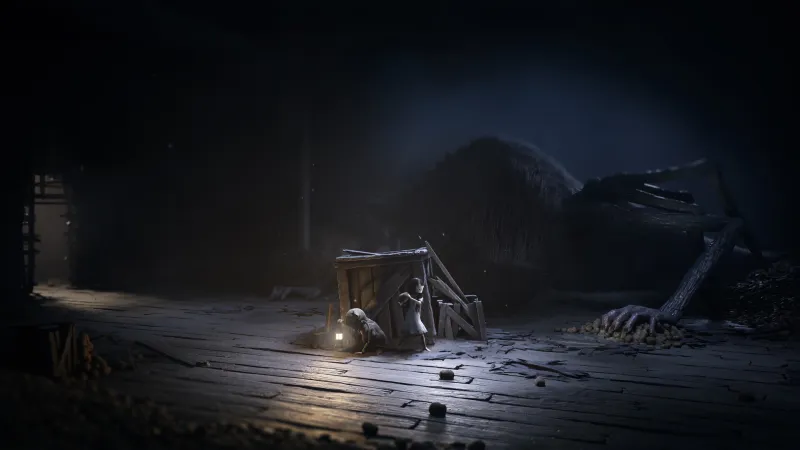
Tarsier Studios has built a reputation on making horror that’s unsettling yet inviting, and Reanimal feels like the natural evolution of that identity.
As a longtime fan of the Little Nightmares series—one I’ve shared with my daughter across games, comics, and spin-offs—I was immediately drawn to Reanimal. Though Little Nightmares III isn’t being developed by Tarsier, Reanimal feels like the spiritual successor many fans have been waiting for.
The public demo has been available for a while, but I only just got around to it this week, and I was genuinely surprised. Spoken dialogue was unexpected, but the oppressive atmosphere, unsettling imagery, and meticulous environmental storytelling were instantly familiar.
Unlike Little Nightmares, Reanimal unfolds in fully 3D environments, offering a new perspective on Tarsier’s signature style. It feels like a Demon’s Souls to Dark Souls moment—a studio refining its ideas while stepping into something larger and more ambitious.
The demo ends far too soon, leaving me eager for more. Thankfully, the wait won’t be long: Reanimal launches February 13, and it’s already one of my most anticipated games of the year.
Final Thoughts
Whether you’re revisiting a shared world reshaped by thousands of players, discovering a long-lost classic, or laughing your way through Sonic’s most unhinged adventure, this weekend offers a reminder of why games matter. Not just as products or content drops, but as experiences—sometimes profound, sometimes ridiculous, often unforgettable.
Clear your schedule. Pick something unexpected. And enjoy the rare luxury of playing purely for the love of it.