
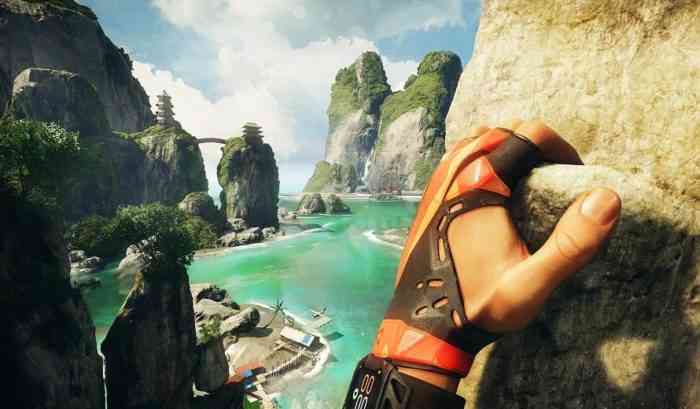
Virtual reality has traveled a long road from novelty to necessity. What was once seen as an experimental corner of gaming—bulky headsets, tech demos, and short-lived curiosities—has matured into one of the most compelling frontiers in interactive entertainment. As we move into 2026, VR is no longer about proving that immersion is possible; it’s about proving how far immersion can go.
Today’s best VR games deliver experiences that traditional flat-screen gaming simply cannot replicate. They demand physical movement, spatial awareness, and emotional presence. You don’t just control a character—you inhabit one. Whether you’re gripping a virtual sword, reloading a weapon by hand, or locking eyes with an AI-driven character who reacts to your body language, VR gaming in 2026 feels more alive than ever.
This year’s standout titles reflect the medium’s growing confidence. Developers are no longer chasing gimmicks. Instead, they are crafting deep mechanics, strong narratives, and polished systems that justify VR as a primary platform. From intense action and atmospheric horror to creative sandboxes and meditative adventures, these experiences define The Best VR Games for 2026.
VR in 2026: A Medium Comes of Age
The VR landscape of 2026 is shaped by more powerful standalone headsets, refined motion tracking, and better comfort design. Players can now enjoy long sessions without fatigue, while improved hand tracking and haptic feedback create a stronger illusion of presence. Importantly, developers have learned the language of VR—how to guide players naturally, reduce motion sickness, and design worlds that feel intuitive rather than overwhelming.
What separates modern VR games from their early predecessors is confidence. These games are not afraid to be slower, more tactile, or more experimental. They trust players to engage with systems that reward physical interaction and spatial thinking. The result is a library of titles that feel purposeful, memorable, and uniquely suited to virtual reality.
Half-Life: Alyx (Still the Gold Standard)
Even years after its release, Half-Life: Alyx remains a benchmark for VR design—and in 2026, it still belongs in any discussion of the best VR games. Valve’s return to the Half-Life universe demonstrated what happens when a major studio commits fully to VR rather than treating it as a side project.
The game’s genius lies in its restraint. Combat is deliberate, environmental puzzles feel organic, and interactions—like rummaging through drawers or manually reloading weapons—are grounded in physical logic. Alyx doesn’t overwhelm players with constant action; instead, it uses pacing and atmosphere to build tension. Its influence can be seen across the VR industry, as many modern titles borrow its approach to interaction and world design.
Asgard’s Wrath 2
If Half-Life: Alyx represents VR refinement, Asgard’s Wrath 2 represents VR ambition. This sprawling action RPG delivers a scope once thought impossible for standalone headsets. With massive environments, complex combat systems, and hours upon hours of content, it proves that VR can support epic-scale experiences.
Combat blends melee, magic, and puzzle-solving, requiring players to physically dodge, block, and strike. The game’s mythological setting feels alive, with towering gods, intricate dungeons, and richly detailed environments. More importantly, it respects player agency—allowing freedom in how challenges are approached. In 2026, Asgard’s Wrath 2 stands as a milestone for long-form VR gaming.
Beat Saber (The Evergreen Icon)
Few VR games have achieved the cultural impact of Beat Saber. Years after its debut, it remains one of the most played and most beloved VR titles—and in 2026, it shows no signs of fading. Its brilliance lies in simplicity: slice incoming blocks to the rhythm of music using lightsabers. No complicated controls, no steep learning curve—just pure, kinetic joy.
What keeps Beat Saber relevant is its constant evolution. New music packs, community-created content, and refined mechanics ensure that it feels fresh even after countless sessions. It’s also one of the best demonstrations of VR as a physical experience, blending exercise, rhythm, and flow into something uniquely satisfying.
Resident Evil 4 VR
Horror and VR are a natural pairing, and Resident Evil 4 VR remains one of the genre’s most intense offerings. Reimagining a classic survival horror game for virtual reality was no small task, but the result is transformative. Familiar locations become deeply unsettling when viewed at human scale, and combat feels more personal when every reload and knife slash is performed by hand.
The game strikes a careful balance between fear and empowerment. While the tension is constant, the physicality of VR gives players a sense of control that enhances immersion rather than diminishing fear. In 2026, Resident Evil 4 VR continues to be a must-play for anyone who believes VR horror should be both terrifying and mechanically satisfying.
Boneworks and Bonelab
If realism is the holy grail of VR interaction, Boneworks and its successor Bonelab come closer than almost any other titles. These physics-driven experiences allow players to manipulate the world with near-total freedom. Objects have weight, momentum matters, and your virtual body behaves according to believable physical rules.
This design philosophy makes every encounter unpredictable—and often hilarious. Combat can be improvised using whatever objects are nearby, while puzzles encourage creative problem-solving rather than rigid solutions. While the learning curve can be steep, players willing to engage with its systems are rewarded with one of the most immersive VR sandboxes available in 2026.
No Man’s Sky VR
What began as a controversial flat-screen release has evolved into one of VR’s most impressive ongoing success stories. No Man’s Sky VR allows players to explore an infinite universe entirely in virtual reality, from piloting spacecraft to walking alien planets and managing bases.
The scale of the experience is breathtaking. Standing on the bridge of your ship, gazing out into space, or watching a massive planet rise on the horizon creates moments that simply cannot be replicated outside VR. Continuous updates have refined performance and interaction, making No Man’s Sky VR a showcase for long-term VR support done right.
The Walking Dead: Saints & Sinners
Few VR games capture physical tension as effectively as The Walking Dead: Saints & Sinners. Every action—from opening a door to driving a knife into a walker’s skull—feels deliberate and weighted. The game’s stamina system reinforces the feeling of vulnerability, forcing players to think carefully before engaging in combat.
Beyond its mechanics, the game excels at atmosphere. Its ruined environments tell stories through environmental detail, while moral choices add narrative weight to player decisions. In 2026, it remains one of the most immersive survival experiences VR has to offer.
Moss: Book II
Not all great VR games rely on intensity or realism. Moss: Book II demonstrates the power of charm, storytelling, and perspective. Instead of placing players inside the action, the game positions them as a guiding presence, helping the brave mouse Quill navigate a beautifully crafted fantasy world.
The combination of diorama-style environments and gentle puzzle-solving creates a sense of wonder that feels almost storybook-like. Interaction is tactile and thoughtful, encouraging players to lean in, observe closely, and feel emotionally connected to the character. It’s a reminder that VR can be intimate and heartfelt, not just thrilling.
Pistol Whip
Pistol Whip blends rhythm, shooting, and movement into a stylish, high-energy experience. Often described as “John Wick meets Beat Saber,” the game challenges players to shoot enemies in time with pounding electronic music while physically dodging incoming fire.
The result is a game that feels like an action movie you’re starring in. Its minimalist visuals keep the focus on movement and flow, while frequent updates add new tracks and modes. In 2026, Pistol Whip remains one of the best examples of VR as a full-body, adrenaline-fueled experience.
VR Chat (The Social Frontier)
While not a traditional “game” in the conventional sense, VRChat continues to be one of the most important VR experiences available. It serves as a social platform, creative space, and cultural experiment rolled into one. Players can explore user-created worlds, attend events, or simply hang out as wildly imaginative avatars.
In 2026, VRChat highlights the growing social dimension of virtual reality. Its importance lies not in mechanics or graphics, but in human connection. As VR becomes more mainstream, experiences like VRChat show how the medium can redefine how people interact online.
Why VR Gaming Matters in 2026
The best VR games of 2026 share a common philosophy: presence matters. These titles understand that VR’s greatest strength is not raw power or visual fidelity, but the feeling of being there. They design systems that respect player movement, perception, and agency.
VR also continues to blur the line between gaming and other experiences. Fitness, storytelling, creativity, and social interaction all coexist within the same medium. As developers grow more comfortable designing specifically for VR, the quality gap between experimental projects and fully realized games continues to shrink.
The Future of VR Games
Looking ahead, the future of VR gaming feels increasingly secure. Better hardware, stronger developer tools, and a growing audience mean that VR is no longer fighting for relevance—it’s defining its own space. The best VR games for 2026 are not just impressive technical achievements; they are meaningful experiences that linger long after the headset comes off.
From epic adventures and pulse-pounding action to quiet moments of connection and creativity, VR has proven that it is not a gimmick, but a powerful storytelling and gameplay medium. As long as developers continue to respect what makes virtual reality unique, the next generation of VR games promises to be even more immersive, more personal, and more unforgettable.
In 2026, virtual reality isn’t the future of gaming—it’s a vital part of its present.