
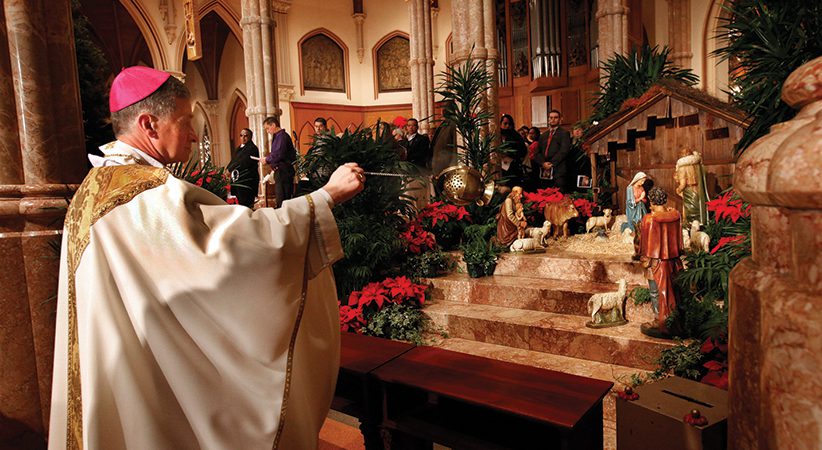
Every December, homes around the world begin to glow. Strings of lights shimmer from rooftops, wreaths hang proudly on doors, nativity scenes sit quietly on mantels, and evergreen trees stand tall in living rooms adorned with ornaments, ribbons, and stars. Though today’s holiday season is often a blend of consumer culture, family tradition, and festive celebration, the roots of Christmas decoration stretch far deeper. They reach into the ancient world—into the traditions of early Christians, medieval worship practices, and even earlier pagan winter customs.
Christmas decorating, at its heart, is not just a festive pastime. It is—and historically has been—profoundly tied to religious ritual, symbolism, and spiritual expression. The simple act of hanging lights, arranging holly, or putting up a tree carries layers of meaning shaped by centuries of faith, folklore, and cultural adaptation.
As we explore the history and symbolism behind these beloved traditions, it becomes clear that Christmas decorations are more than seasonal aesthetics. They are powerful, ritualistic expressions of belief, hope, resilience, and reverence for the Nativity story.
A Ritual Rooted in Light: The Spiritual Meaning Behind Christmas Illumination
From strings of fairy lights to flickering candles, illumination is one of the core symbols of Christmas decorating. Its religious meaning is unmistakable.
Light as the Symbol of Christ
In Christian theology, Jesus is often referred to as the “Light of the World.” Early Christians used candles during Advent to symbolize Christ pushing away the darkness of sin and despair. Homes were illuminated to welcome the newborn Savior—an act mirroring the shepherds and Magi who were guided by the divine light of the stars.
Before the common use of electricity, families would place candles in windows or around the home as a devotional reminder of Christ’s presence. Today, while LED lights and modern displays dominate the holiday aesthetic, they continue to express this ancient truth: the world is brighter because Christ has come.
A Layer of Pagan Meaning
Long before Christianity, light was central to winter solstice celebrations. Ancient cultures used fire and lanterns to “hold back” the lengthening darkness as winter reached its peak. When Christianity spread across Europe, the church layered Christian symbolism onto these existing rituals—infusing new theological meaning into familiar solstice traditions.
Evergreens, Trees, and Wreaths: Life in the Midst of Death
Few decorations are as iconic as the Christmas tree. Yet the evergreen tree predates Christian tradition by centuries.
Evergreens in Pagan Rituals
In ancient Rome, Egypt, and Germany, evergreen boughs symbolized life, fertility, and renewal during winter. They were used during solstice festivals such as Saturnalia and in Norse traditions honoring Odin. Because evergreens remained “alive” through winter, they represented resilience and hope—a deeply spiritual concept even before Christianity adopted it.
The Christian Symbolism Added Later
As Christianity spread across Europe, missionaries and priests sought ways to connect the Nativity message to familiar cultural rituals. The winter greenery was reinterpreted in several ways:
- Evergreen trees came to symbolize eternal life in Christ.
- Christmas wreaths—circular and unending—came to represent God’s eternal nature and unbroken love.
- Holly was given striking Christian symbolism:
- Its spiky leaves recalling Christ’s crown of thorns
- Its red berries symbolizing the blood of Christ
Thus, what began as pagan symbols of winter’s endurance became expressions of Christian salvation.
The Star, the Nativity, and the Candy Cane: Decorations with Direct Biblical Meaning
Many elements of Christmas décor trace their meaning directly to the Nativity story.
The Christmas Star
One of the most universally recognized symbols in Christmas decoration is the star placed atop the tree or displayed in windows. This represents the Star of Bethlehem, which guided the Wise Men to the birthplace of Jesus. It signifies guidance, divine intervention, and hope—themes at the heart of Christmas worship.
Nativity Scenes
No Christmas decoration is more explicitly Christian than the nativity crib. First popularized by St. Francis of Assisi in the 13th century, nativity scenes invite believers into the humility of Christ’s birth—placing the Holy Family at the center of worship. By displaying the nativity, families transform their homes into spaces of devotion, connecting daily life to the sacred moment of the Incarnation.
Candy Canes: A Shepherd’s Crook
Though now a sugary treat, the candy cane began as a quiet religious symbol. Its shape reflects the shepherd’s crook, pointing to Jesus as the Good Shepherd. Its red stripes symbolize His sacrifice, while the white stands for purity. These meanings offer a subtle but powerful reminder of Christ’s role and mission.
Holly, Ivy, and Other Sacred Plants: Nature as Theology
Many natural decorations used during Christmas carry symbolic meaning.
Holly
As mentioned, holly’s thorns and red berries have long symbolized Christ’s suffering and sacrifice.
Ivy
Ivy clings tightly to surfaces, even in harsh conditions. It symbolizes faithfulness, dependence on God, and eternal life—values central to Christian worship.
Mistletoe
While modern culture associates mistletoe with romance, its ancient symbolism traces back to Norse mythology and Celtic rituals. Later Christian reinterpretation framed mistletoe as a symbol of healing and reconciliation—a fitting theme for Christmas.
From Pagan Ritual to Christian Celebration: A Story of Adaptation
One of the most fascinating aspects of Christmas decorations is how older pagan symbols were not erased but transformed.
During the early spread of Christianity, many European societies deeply revered winter rituals as expressions of survival, gratitude, and connection to nature. Rather than abolish these customs, early Christian leaders reinterpreted them:
- Evergreen trees became symbols of Christ’s eternal life.
- Solstice lights became reminders of Jesus as light in darkness.
- Winter feasts were reshaped into celebrations of the Nativity.
This process—called enculturation—integrates spiritual truth into familiar cultural symbols. Over time, decorating for Christmas became not only a tradition but also a devotional gesture, a way to bring divine mystery into ordinary homes.
The Act of Decorating as a Devotional Practice
For many believers, preparing for Christmas through decoration is itself a ritual.
Preparing the Heart Through the Home
Just as Advent is a time of spiritual preparation, decorating the home becomes a physical expression of inner readiness. Families place nativity scenes with reverence, light Advent candles prayerfully, and choose decorations that reflect themes of hope, peace, joy, and love.
A Sacred Rhythm
The timing of decorations—traditionally beginning with the Advent season—mirrors the liturgical calendar. Hanging lights, arranging wreaths, and setting out symbols of Christ’s birth echo the church’s own rhythm of anticipation and celebration. In this sense, decorating becomes a sacred act of participation in the story of salvation.
Cultural Layering: How Christmas Decorations Became Universal
Today’s Christmas decorations represent a unique fusion of:
- Christian theology
- Pagan symbolism
- Cultural tradition
- Family custom
- Modern creativity
This blending is part of what makes Christmas so rich and multi-dimensional. People of different backgrounds can find meaning, beauty, and connection in the season’s imagery—whether religious, historical, or personal.
Yet at the core, Christmas decorations remain deeply shaped by faith. Even the most commercial or secular displays often echo ancient Christian messages—light overcoming darkness, life springing up in the dead of winter, hope born in humble circumstances.
Why the Religious Ritual Lives On
Despite cultural shifts and commercialization, the spiritual symbolism behind Christmas decorations endures.
1. They tell the story of Christmas without words.
A nativity scene or a star silently proclaims the message of Christ’s birth.
2. They connect past and present.
Each decoration carries echoes of centuries-old worship practices, myths, and rituals.
3. They create sacred space in ordinary homes.
Christmas decorations transform domestic life into a living expression of faith.
4. They invite reflection.
Lights remind us of hope. Evergreens remind us of life. Stars remind us of guidance.
5. They bring families and communities together.
Decorating is a ritual that fosters unity, memory, and tradition—values deeply religious in nature.
The Meaning Still Matters
In a world where the holiday season is increasingly shaped by commercial pressures, it can be easy to forget the sacred meanings embedded in the décor that surrounds us. But understanding the origins of these decorations brings new depth and appreciation to what might otherwise seem purely festive.
The Christmas tree becomes not only a holiday centerpiece but a symbol of eternal life.
Lights become statements of faith and hope.
Wreaths become reminders of God’s everlasting love.
Nativity scenes become miniature sanctuaries of devotion.
Even simple ornaments can recall centuries of ritual and belief.
Christmas decorations—whether in churches, homes, or public spaces—continue to carry spiritual weight. They serve as visual theology, blending beauty with belief.
Conclusion: Christmas Decorations as Living Ritual
Christmas is a season of wonder, tradition, and celebration. Yet behind the glitter and glow lies a profound truth: Christmas decorations are expressions of a religious ritual that has evolved across centuries. They carry the legacy of ancient winter festivals, early Christian worship, medieval devotion, and modern cultural adaptation.
Whether one approaches them from faith, history, or symbolism, Christmas decorations remain powerful icons of hope, life, and divine mystery. They remind us that in the darkest season of the year, light still shines. That life persists even in the coldest winter. And that the birth of Christ—celebrated in liturgy, song, and decoration—is a story that continues to shape hearts and cultures around the world.
Decorating for Christmas is more than a tradition.
It is an act of storytelling, remembrance, and reverence. It is, and always has been, a sacred ritual.