
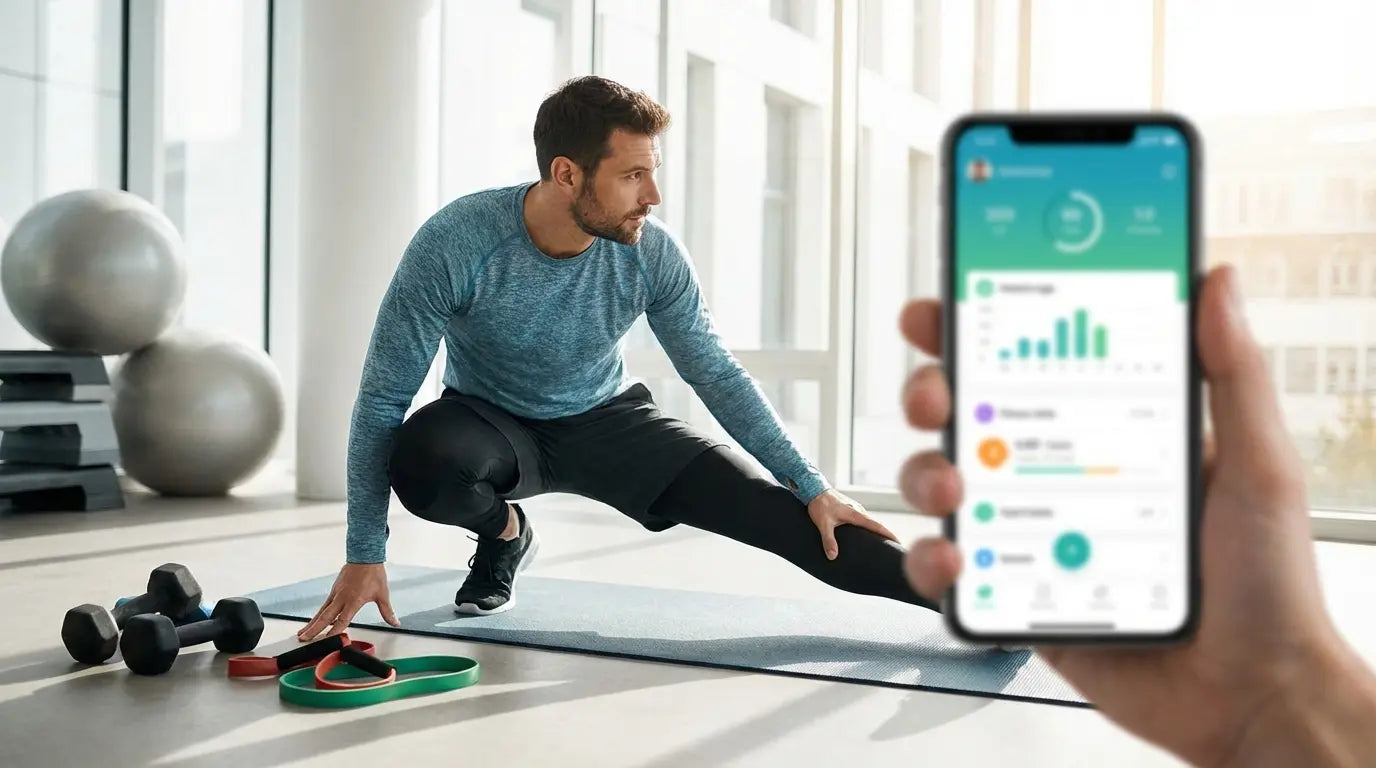
In theory, fitness is simple: train consistently, eat well, recover properly, repeat. In practice, it rarely unfolds that cleanly. Work deadlines stack up. Travel disrupts routines. Meals are skipped or improvised. Sleep becomes inconsistent. Motivation fluctuates. The modern man does not fail at fitness because he lacks information—he fails because systems collapse under real life.
Fitness apps promise structure, accountability, and progress. Yet many men abandon them within weeks. The reason is not laziness or lack of discipline. It’s friction. Too many apps demand perfection: constant inputs, relentless reminders, rigid streaks, and an implicit assumption that every day will be optimized. Real progress, however, is built through imperfect consistency, not flawless execution.
After analyzing long-term usage patterns and real-world behavior, one conclusion becomes clear: there is no single fitness app that does everything exceptionally well. The apps that genuinely help men make progress are those that understand their specific role—and stay in their lane.
Rather than searching for an all-in-one solution, the smartest approach is to build a simple system: one app for food awareness, one for training, one for movement or endurance if needed. Below is a grounded, practical look at seven fitness apps that actually support men in tracking workouts, diet, and progress in 2026—without demanding their lives revolve around a dashboard.
What Makes a Fitness App Actually Useful?
Before diving into individual apps, it’s worth defining what “useful” really means.
A good fitness app:
- Reduces decision fatigue
- Accepts inconsistency instead of punishing it
- Provides clarity, not noise
- Encourages momentum without guilt
- Shows trends rather than obsessing over daily perfection
The best apps don’t motivate through pressure. They motivate by making progress visible and effort tangible. With that lens, here are the apps that consistently deliver value.
MyFitnessPal: Food Awareness Above All
For most men, nutrition is the biggest blind spot. Calories creep upward quietly. Protein intake falls short without notice. Portion sizes drift over time. MyFitnessPal has remained relevant for one reason: it makes eating habits visible.
The app’s extensive food database, barcode scanning, and macro tracking allow users to log meals quickly. Within days, patterns emerge. Late-night snacking becomes obvious. Protein gaps reveal themselves. Calorie surplus—or deficit—stops being theoretical and starts being measurable.
Importantly, MyFitnessPal works best when used as a learning tool, not a lifelong obsession. The most successful users log diligently for a few weeks or months, adjust their habits, then return to the app periodically for recalibration.
Personal Analysis:
MyFitnessPal excels at education. It teaches awareness better than almost any other nutrition app. The risk is psychological—some users fall into obsessive tracking or moralize food choices. Used strategically and intermittently, it’s one of the most powerful tools available.
Best for: Men who want clarity around eating habits, weight management, or macronutrient intake.
Strong: Where Numbers Build Discipline
Strength training thrives on measurable progress. Sets, reps, weight, rest time—these numbers tell a story over weeks and months. Strong is designed specifically for that narrative.
The app strips away unnecessary features and focuses on logging workouts efficiently. Enter exercises, record sets and reps, track progression. The visual charts quietly reinforce consistency by showing strength increases over time.
There are no motivational quotes, no gamified distractions. Strong doesn’t tell you how to feel—it shows you what you’ve done.
Personal Analysis:
Strong works because it respects lifters. It assumes motivation comes from data, not reminders. For men who value progression and structure, this app reinforces discipline better than any push notification ever could.
Best for: Serious lifters, gym-focused training, and men who measure progress through performance metrics.
Hevy: Accountability Without Performance Anxiety
Hevy offers similar workout tracking capabilities to Strong, but adds a subtle social layer. Users can follow friends, see logged workouts, and share progress without turning fitness into a content platform.
This distinction matters. Unlike social-heavy fitness apps that prioritize aesthetics and competition, Hevy’s social features are quiet and optional. They create accountability through visibility, not pressure.
Seeing a friend log a workout can be enough to prompt consistency—without triggering comparison or burnout.
Personal Analysis:
Hevy works best for men who stay consistent when effort feels acknowledged. The social layer is supportive rather than performative, making it easier to stay engaged long-term.
Best for: Men who value accountability and community without turning workouts into social media.
Nike Training Club: Structure When Motivation Fails
Some days, planning a workout feels harder than doing the workout itself. Nike Training Club eliminates that friction.
The app offers a wide range of guided workouts across strength, HIIT, mobility, yoga, and recovery. Many sessions require little or no equipment, making them ideal for home workouts, travel days, or low-motivation periods.
Nike Training Club shines when life disrupts routine. It keeps users moving even when gym access disappears or schedules collapse.
Personal Analysis:
This is not a primary tracking app—it’s a safety net. When structure breaks down, Nike Training Club keeps momentum alive. That alone makes it valuable.
Best for: Beginners, home workouts, travel, or maintaining activity during chaotic periods.
Google Fit: The Quiet Truth Teller
Google Fit does something few fitness apps manage well: it stays out of the way.
By passively tracking steps, activity minutes, and movement trends—especially when paired with a smartwatch—it provides a long-term view of overall activity. There’s no pressure to log workouts manually, no constant prompts to engage.
Over time, Google Fit tells the truth. It shows whether you’re moving more or less, becoming more active or gradually sedentary.
Personal Analysis:
This is the most non-intrusive fitness tracker available. It’s honest without being demanding. For many men, that balance is the difference between long-term use and abandonment.
Best for: Men who want awareness without effort, and a realistic view of daily movement.
Fitness Online: Simplicity Over Precision
Fitness Online combines workout plans, exercise demonstrations, and basic nutrition guidance in one place. It doesn’t aim to be perfect—it aims to be usable.
By reducing choice overload, the app lowers the barrier to action. You open it, follow a plan, and move. That simplicity is especially valuable for beginners or men returning to fitness after a long break.
While advanced lifters may outgrow its structure, Fitness Online excels in the early stages where consistency matters more than optimization.
Personal Analysis:
Precision doesn’t build habits—simplicity does. Fitness Online understands that early consistency beats perfect programming.
Best for: Beginners, returning gym-goers, or men overwhelmed by too many options.
Strava: Where Endurance Becomes Engaging
For runners, cyclists, and endurance-focused athletes, Strava remains the gold standard. It tracks distance, pace, elevation, heart rate, and performance trends with remarkable clarity.
What sets Strava apart is its use of segments and challenges. Outdoor routes become benchmarks. Progress becomes competitive—not just with others, but with past versions of yourself.
Strava transforms solitary outdoor workouts into something engaging and goal-driven.
Personal Analysis:
Strava is not a general fitness app—and it shouldn’t try to be. For endurance athletes, however, it provides motivation and structure that gym-focused tools simply cannot.
Best for: Runners, cyclists, hikers, and men who prioritize outdoor performance.
Why No Single App Wins
The idea of a “perfect” fitness app is appealing—and unrealistic. Nutrition tracking requires different psychology than strength progression. Endurance training demands different metrics than daily movement. Attempting to combine everything into one platform usually results in complexity and burnout.
Men who make long-term progress don’t use more apps—they use fewer, better-chosen ones.
A common effective setup looks like this:
- One app for strength or workouts (Strong or Hevy)
- One app for nutrition awareness (MyFitnessPal)
- One passive tracker for movement or endurance (Google Fit or Strava)
This system adapts to real life rather than fighting it.
Final Takeaway: Build a System, Not a Stack
Fitness apps don’t create discipline—they support it. Their true value lies in reducing friction, reinforcing consistency, and making progress visible.
The men who succeed long term aren’t those with the most advanced dashboards. They’re the ones who choose tools that fit their lifestyle, tolerate inconsistency, and reward effort over perfection.
In 2026, the smartest fitness strategy isn’t more tracking—it’s better tracking. Build a system that works when life doesn’t. That’s where real progress lives.
Frequently Asked Questions
1. How many fitness apps should men realistically use?
Most men benefit from two apps: one for workout tracking and one for nutrition or general activity. More than that often increases friction and abandonment.
2. Are paid fitness apps better than free ones?
Not necessarily. Free apps cover the basics extremely well. Paid versions are worth it only if they meaningfully improve consistency or provide structure you’ll actually use.
3. Can fitness apps replace a personal trainer?
No. Apps track and guide, but they can’t correct form, adapt emotionally, or respond in real time. They work best as support tools, not replacements.
4. Should beginners track workouts or diet first?
Workouts first. Building a training habit matters more early on. Nutrition tracking can be added once consistency is established.
5. How long before fitness apps show real results?
Most apps reveal trends within weeks. Visible physical changes depend on consistent training, nutrition discipline, and patience over several months.
Fitness is not about perfect days—it’s about sustainable systems. The right apps don’t demand control over your life. They simply help you show up again tomorrow.