
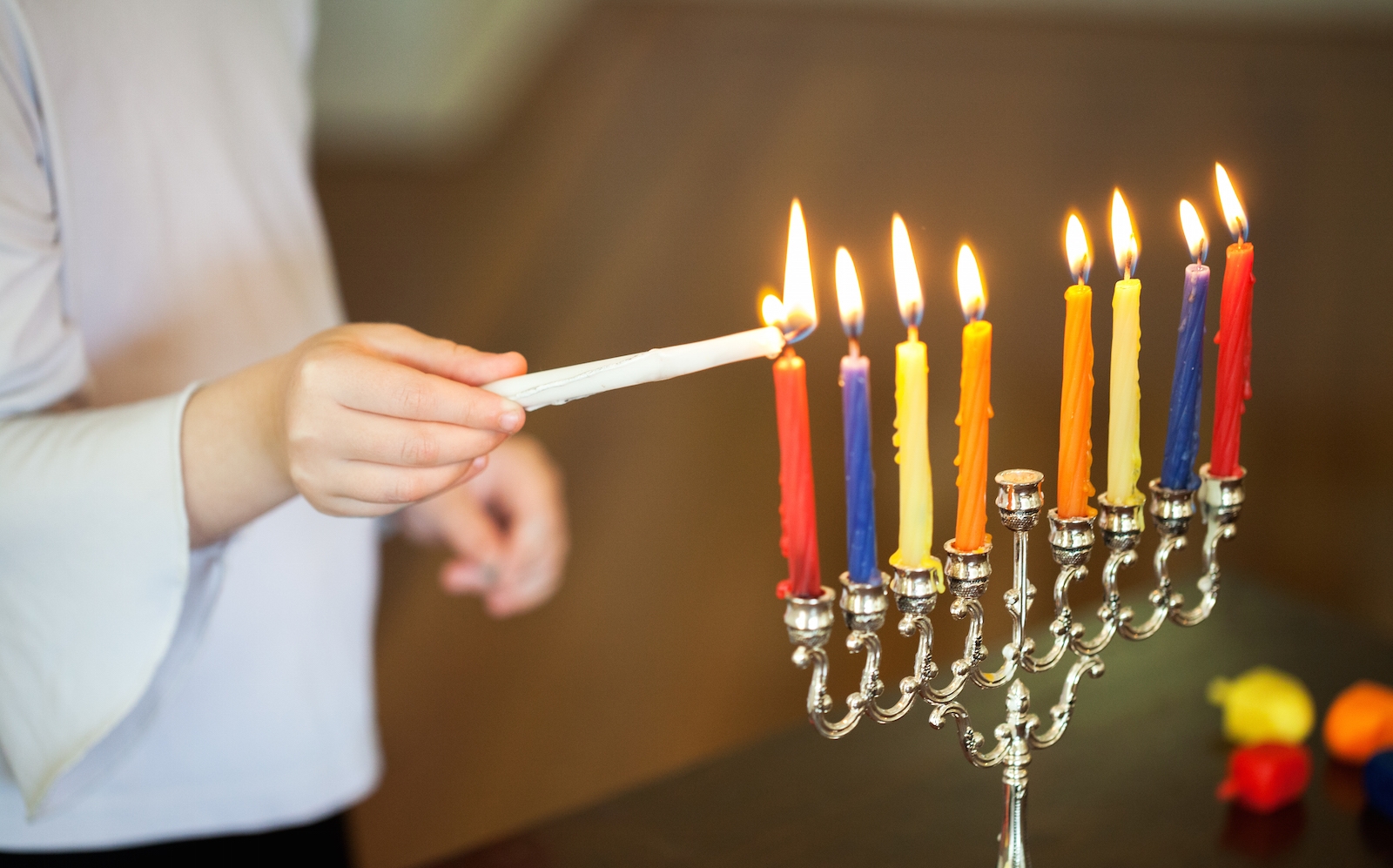
Each winter, as days grow shorter and nights lengthen, Jewish homes around the world are filled with light. Candles flicker in windows, families gather around tables laden with fried foods, and children sing songs that have echoed across centuries. This is Hanukkah — the Jewish Festival of Lights — a holiday rooted in ancient history, religious memory, and enduring joy.
This year, Hanukkah begins on 18 December and lasts for eight days, making it one of the most recognisable Jewish festivals globally. While it is not among the most solemn holidays in the Jewish calendar, Hanukkah occupies a special place as a celebration of faith, resilience, and the right to religious freedom.
Though often portrayed in popular culture through candle-lighting and gift-giving, Hanukkah carries a deeper story — one that blends historical revolt, religious symbolism, family tradition, and cultural diversity across Jewish communities worldwide.
What is Hanukkah?
Hanukkah, also known as the Festival of Lights or the Festival of Dedication, falls on the 25th day of Kislev, the ninth month of the Hebrew calendar. Because the Hebrew calendar is lunar-based, the date of Hanukkah changes each year in the Gregorian calendar, usually occurring in late November or December.
At its core, Hanukkah commemorates a moment of survival: the reclaiming of Jewish religious freedom and identity in the face of forced assimilation and oppression more than 2,000 years ago.
Unlike major Jewish festivals such as Passover or Yom Kippur, Hanukkah is not mentioned in the Hebrew Bible. Instead, its origins lie in historical events recorded in later Jewish texts and preserved through religious tradition.
The historical roots: rebellion and resistance
The story of Hanukkah begins in the second century BC, during the rule of the Seleucid Empire over the land of Judea. King Antiochus IV Epiphanes, seeking to impose Hellenistic (Greek) culture and religious practices, outlawed Jewish rituals and desecrated the Second Temple in Jerusalem, dedicating it to Greek gods.
For many Jews, this was an existential threat — not merely political domination, but an attempt to erase their religious identity.
In response, a small group of Jewish fighters known as the Maccabees, led by Judah Maccabee, launched a rebellion in 165 BC. Against overwhelming odds, they defeated the Seleucid forces and reclaimed Jerusalem. When they entered the Temple, they sought to rededicate it to Jewish worship — an act from which Hanukkah takes its name.
The miracle of the oil
According to Jewish religious tradition, when the Maccabees purified the Temple, they found only a small amount of ritually pure oil — enough to light the Temple’s menorah for just one or two days. Miraculously, the oil burned for eight days, until more could be prepared.
This miracle became the spiritual heart of Hanukkah. Each candle lit represents not only light overcoming darkness, but faith enduring when resources seem insufficient.
It is this miracle that gives Hanukkah its most iconic ritual: the lighting of candles over eight consecutive nights.
Lighting the menorah: ritual and symbolism
Central to Hanukkah celebrations is the menorah, more precisely called a hanukkiah, a nine-branched candelabrum. Eight branches represent the eight nights of the miracle, while the ninth candle — the shamash — is used to light the others.
Each evening at sunset:
- One additional candle is lit
- Blessings are recited
- Traditional songs may be sung
- The menorah is placed in a visible spot, often near a window or doorway, to publicise the miracle
The act of lighting the candles is both private and communal — a moment of family gathering and a public declaration of faith.
Joy, food, and family
Though rooted in struggle, Hanukkah is a joyful festival, especially for children. Families gather each night, sharing meals, stories, and traditions passed down through generations.
One of the most beloved aspects of Hanukkah is its food — particularly fried dishes, symbolising the miracle of the oil.
Common Hanukkah foods vary by region, but often include:
- Latkes (fried potato pancakes), especially among Ashkenazi Jews
- Sufganiyot (jelly-filled doughnuts), popular in Israel and many Sephardic communities
- Fried pastries and sweets soaked in honey
- Potato fritters and spiced vegetable dishes
Eating these foods is both celebratory and symbolic — a way of turning history into something tangible and delicious.
Games, songs, and storytelling
Because Hanukkah is family-oriented, children play a central role. One of the most recognisable traditions is the dreidel game — a spinning top game played in many Jewish communities. Each side of the dreidel bears a Hebrew letter that together form the phrase: “A great miracle happened there.”
Children also:
- Sing Hanukkah songs
- Listen to stories of the Maccabees
- Receive small gifts or coins (gelt)
- Learn about the values of courage, faith, and perseverance
The emphasis is not on religious obligation alone, but on passing memory and identity to the next generation.
Hanukkah during the pandemic and beyond
In recent years, global events such as the COVID-19 pandemic have reshaped how Hanukkah is observed in many countries. Communal prayers, synagogue gatherings, and public celebrations have sometimes been limited due to health restrictions.
Yet the core rituals have endured.
Lighting candles at home, reciting blessings, and celebrating with family have continued — underscoring one of Hanukkah’s enduring themes: that even in isolation or uncertainty, light can persist.
Hanukkah in the Arab world: the Moroccan example
Morocco stands out as one of the few Arab countries where Hanukkah remains part of the public cultural memory. With a long history of Jewish presence, Moroccan cities such as Fez, Marrakech, and Casablanca still host functioning synagogues and preserved Jewish quarters known as mellahs.
In Moroccan Jewish homes, Hanukkah foods reflect local flavors:
- Sfenj: deep-fried doughnuts soaked in honey
- Maakouda: spiced mashed potato fritters fried in oil
What makes Morocco unique is the shared celebration between Jews and Muslims. In many neighbourhoods, Jewish families welcome Muslim friends and neighbours to share meals during holidays — a tradition that reflects centuries of coexistence.
Another notable example is Mimouna, the Moroccan Jewish festival marking the end of Passover, which has become a national symbol of interfaith harmony.
Identity, memory, and modern meaning
Today, Hanukkah holds different meanings for different Jews. For some, it is a deeply religious commemoration. For others, it is a cultural celebration tied to family, identity, and history.
In a modern world still grappling with questions of religious freedom, minority rights, and cultural survival, Hanukkah’s message remains strikingly relevant. It recalls a moment when a small community resisted erasure — and chose to preserve its beliefs, language, and rituals.
The festival does not celebrate conquest or power, but dedication, faith, and continuity.
A festival of light in uncertain times
As menorahs are lit this year, from Jerusalem to New York, from Paris to Casablanca, Hanukkah once again becomes a quiet but powerful statement: that light matters, memory matters, and identity endures.
In the glow of eight candles, Jews around the world are not only remembering an ancient miracle — they are affirming a living tradition that continues to illuminate homes, families, and histories, year after year.